Kandahar
Information Kandahar
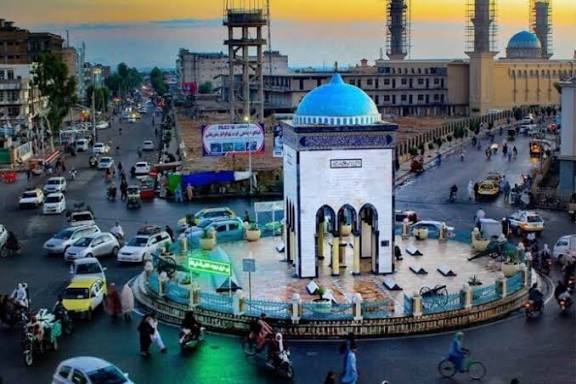
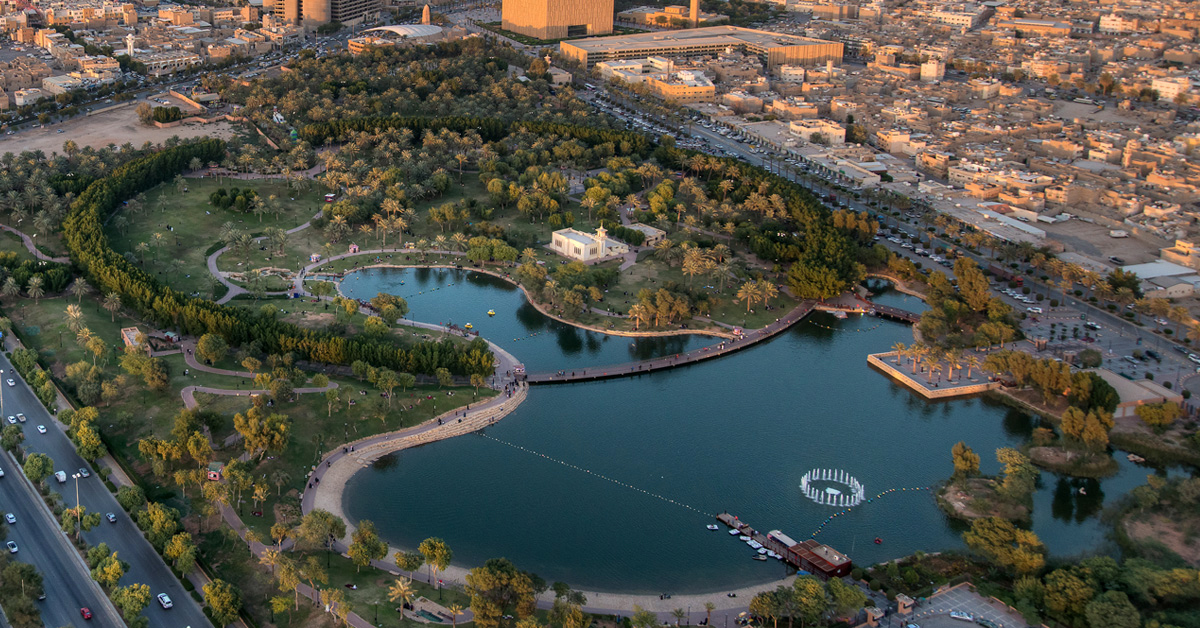
Kandahar (Pashto: کندهار) is the capital of Kandahar province, and the largest city in Southern Afghanistan.
Kandahar is also the second largest city in Afghanistan after the capital Kabul, and was the first capital of the modern state of Afghanistan in the 18th century.
Kandahar's residents are Pashtuns (Pashto: پښتون Paṣ̌tun, Pax̌tun) of various tribes, with small communities of Tajiks, Turkmens, Uzbeks, Hazaras, Baloch and others scattered in and around the city.
The people of Kandahar enjoy humor and laughter, and they often talk about sports, history and geopolitics. Many influential Afghan rulers, such as Mirwais Khan Hotak, Ahmad Shah Durrani, Abdur Rahman Khan, Amanullah Khan, and Hamid Karzai, originate from Kandahar.
The city has also produced a number of prominent Afghan poets, singers, scholars, intellectuals, academics and businessmen.
Get in
By plane
Kandahar International Airport (KDH). now has flights on Ariana Afghan Airlines & Kam Air between Kandahar, Dubai every Wednesday Ariana & Monday Kam Air; as well as three domestic flights per week between Kabul and Kandahar and one Domestic flight from Kandahar-Herat-Kandahar every Tuesday by KamAir.
Flights are also available by the UN & ICRC but are only open to UN staff and other approved organizations.
By car
The A01 highway links Kandahar with Kabul. It is one of the busiest in Afghanistan. The highways in Afghanistan are sometimes dangerous due to militant activities but the militants do not necessarily target tourists. Total drive between Kandahar and Kabul is approximately 6 hours.
The highway from Kandahar to Herat is sometimes dangerous, especially where it passes in Helmand and Farah provinces. Highway A75 runs southeast towards Spin Boldak, which is the last town in Afghanistan before the start of a Pakistani highway.
By bus
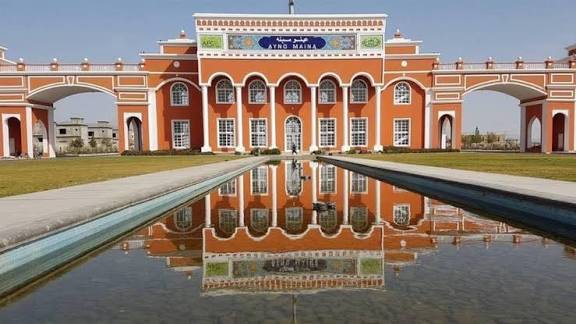
There is a large national bus station called "Kabul Adda" (meaning Kabul Junction) and is located a block north of Durahi Circle in the affluent Aino Mina section of the city. The buses take passengers to Kabul, Lashkar Gah, Zaranj, Herat, and Spin Boldak.
Smaller vehicles are also available at this station to take passengers to other destinations within the province and beyond.
See
• Mosque of the Cloak of the Prophet Mohammad (Kharqa e Sharif)
• Chil Zena
• Kandahar museum
• Tomb of Ahmad Shah Durrani
• Shrine of Hassan Abdal
• Shrine of Mirwais Khan Hotak
• Dahla DAM or Arghandab DAM
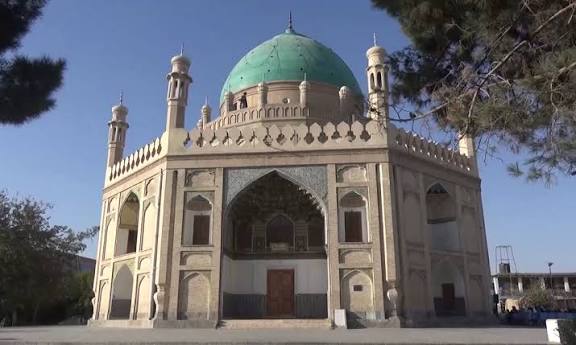
1. Mosque of the Cloak of the Prophet Mohammad (Kherqa e Sharif):
The Cloak of Muhammad (Kherqa) is a relic hidden inside Kirka Sharif in Kandahar, Afghanistan. It is a cloak believed to have been worn by the Islamic prophet Muhammad during the Night Journey in 621 AD.
The cloak itself is locked away inside the mosque and is rarely seen. It has been guarded by the same family for over 250 years. Its guardians have traditionally only shown the cloak to recognized leaders of Afghanistan, although in times of great crisis such as natural disasters, it has been publicly displayed as a means of reassurance.
The Mausoleum of Ahmad Shah Durrani is located adjacent to the Shrine of the Cloak.
I recommend visiting the mosque after prayer times so that you have enough time to explore.
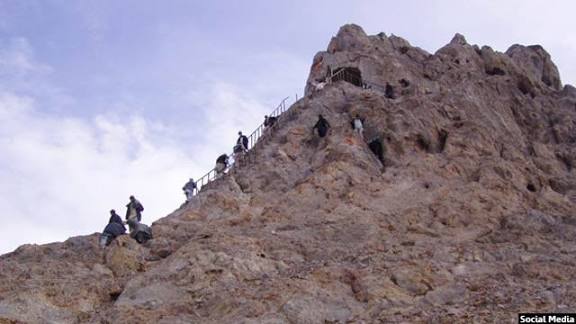
2. Chil zena (40 steps Stair):
Historical site located in the Sarpuza neighborhood. Climbing the 40 steps is dangerous. As such, children and elders should not climb them. Chehel Zina, is a mountainous outcrop at the western limit of the city of Kandahar. Forty stone steps lead to the top of the outcrop, hence its name. It gives a commanding view on the city of Kandahar.
3. Kandahar Museum:
The Kandahar Museum, also known as the Kandahar Provincial Museum, is a cultural institution that houses a vast collection of historical artifacts representing the rich heritage of the Kandahar region. It showcases items from various historical periods, including the Stone Age, Bronze Age, Kushan period, Bakhtari period, Islamic period, and the contemporary era.
The museum holds approximately 850 types of historical artifacts, some dating back 6,000 years.
4. Tomb of Ahmad Shah Durrani
Who is Ahmad Shah Durrani?
Ahmad Shāh Durrānī (Pashto: احمد شاه دراني; Persian: احمد شاه درانی; c. 1720–1722 – 4 June 1772), also known as Ahmad Shāh Abdālī (Pashto: احمد شاه ابدالي), was the first ruler and founder of the Durrani Empire. He is often regarded as the founder of modern Afghanistan.
As Shah, he relentlessly led military campaigns for over 25 years across West Asia, Central Asia, and South Asia, creating one of the largest Islamic empires in the world, encompassing Afghanistan, much of Pakistan, Iranian Khorasan, and parts of Northern India.
His birth name was Ahmad Khan, born into the Abdali tribe. After his accession to power in 1747, he became known as Ahmad Shah. His tribe also changed the name from Abdali, instead becoming the Durrani. Afghans often call him Ahmad Shāh Bābā, meaning "Ahmad Shah the Father".
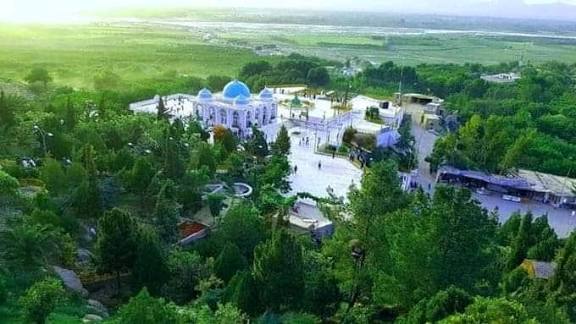
5. Shrine of Hassan Abdal:
Hassan Abdal (Baba Saab). Hassan Abdal, also known as Baba Wali, a poor man of unknown origin performed miracles for people, is buried at this site. Nobody has been able to determine who he was or where he came from. When he died, the people of Kandahar decided to bury him at this site.
What is the story?
• Guru Nanak, the founder of Sikhism, arrived in Hasan Abdal during the summer season, likely around 1521. He was traveling with his companion, Bhai Mardana.
• Hasan Abdal had a natural spring controlled by Wali Qandhari, a local ascetic. When Bhai Mardana requested water, Wali Qandhari refused, even after being approached multiple times.
• Annoyed by the refusal, Guru Nanak is said to have created a new spring of water by simply striking the earth with his hand, causing the existing spring to dry up.
• Wali Qandhari, angered by this, threw a large boulder at Guru Nanak. The Guru stopped the boulder with his hand, leaving an imprint on it.
• This rock with the handprint is now a sacred site known as Panja Sahib, located at Gurdwara Panja Sahib in Hasan Abdal.
6. Shrine of Mirwais khan Hotak:
The shrine of Mirwais Khan Hotak, also known as Mirwais Nika, is located in Kandahar, Afghanistan. He was a prominent Afghan leader and the founder of the Hotak dynasty. The shrine is a significant historical site, visited by those who honor his role in establishing Afghan independence by leading a rebellion against the Safavid Empire (Gurgin Khan/George) who was treating afghans like slaves and was a cruel man. in the early 18th century.
Mirwais Khan is regarded as a national hero, and his tomb, a simple yet respected structure, reflects Afghan architectural styles. It is located in the Kokaran section of Kandahar. The site is an important symbol of Afghan resistance and independence.
7. Dahla Dam or Arghandab Dam:
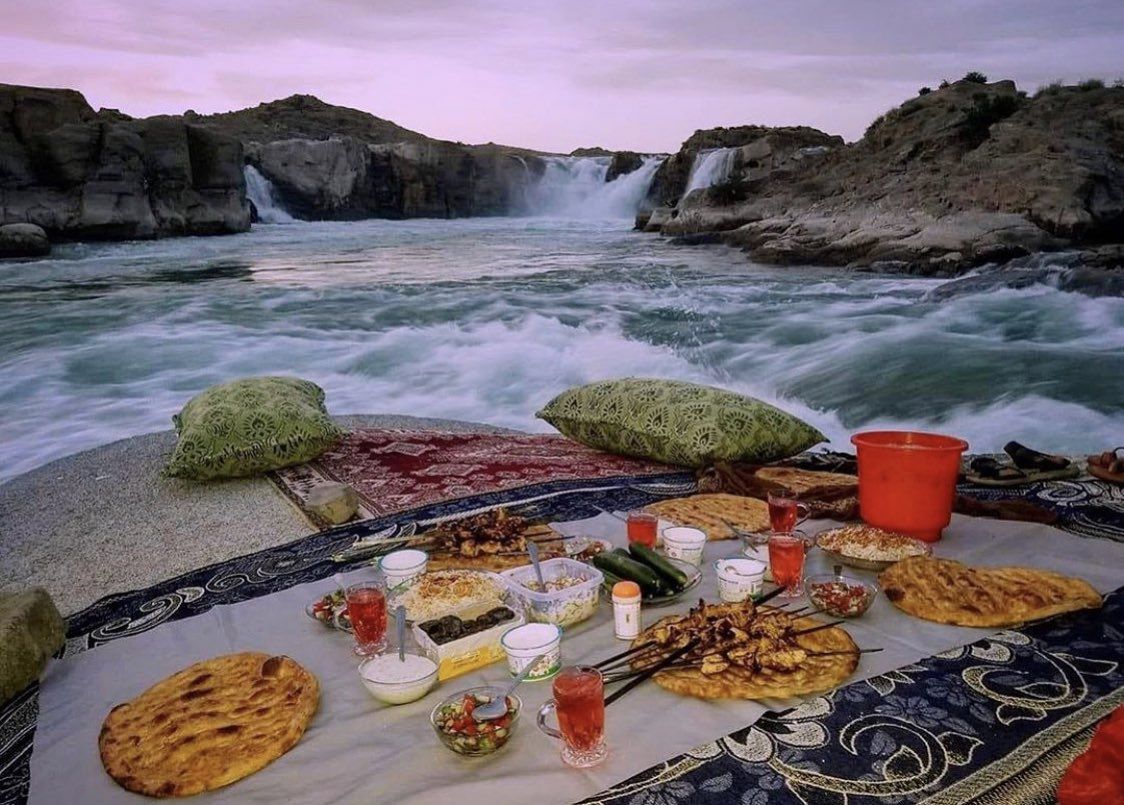
Dahla Dam, also known as Arghandab Dam, is a significant water resource project located in Kandahar Province, Afghanistan. Built in 1952, it is the second largest dam in Afghanistan and plays a crucial role in providing irrigation water to the Kandahar region and supplying drinking water to the city. The dam is situated in the Shah Wali Kot district, approximately 40 kilometers (25 miles) north of Kandahar city.
Eat
There are a growing number of restaurants. Most of them serve Afghan cuisine. The popular items include roasted chicken, mutton, lamb, and beef, along with rice dishes, cooked vegetables, and plenty of fresh fruits. Fast food places that serve pizzas, burgers and other sandwiches are also growing. The best street food in Kandahar is fried fish and samosas along with several styles of freshly-baked local bread.
Restaurants:
Budget:
Lamar Restaurant, Shar-e-Naw, ☏ +93 700363636. 5-star rated restaurant with Indian, Continental and Afghan cuisine.
Mano Salwa Restaurant, in Share New neighborhood.
Mid-range:
Afghan Dubai BBQ, in Aino Mina, +93 70 400 4458.
Anar Restaurant, Shar-e Nau (next to Afghan Turk High School), ☏ +93 70 079 7400.
Delicious Pizza, middle of the city (very near Omar Mosque), ☏ +93 70 036 9800.
Italian Pizza, Aino Mina (next to female park), ☏ +93 70 035 2027.
Mumtaz Restaurant (In Shaheedan-Chowk). Indian, Chinese and Afghan cuisine, in a large hotel.
Pizza Hot, Aino Mina (next to Children Park), ☏ +93 70 001 4149.
Pizza King, Aino Mina next to Children Park, ☏ +93 70 079 1100.
Pizza Point, Aino Mina, ☏ +93 70 300 0747.
Royal Restaurant, in Aino Mina, +93 070405854.
Shabistan Restaurant, in Aino Mina, +93 70 035 8725.
Tasty Pizza, Shar-e Nau (next to Kandahar Football Stadium), ☏ +93 70 027 2723.
Turkish Taste, in Aino Mina.
Sleep
Budget:
Afghania Restaurant And Guesthouse, First Fountain in Aino Mina (across from Afghan United Bank), ☏ +93 70 032 0342.
Armani Pashtun Hotel (Two miles from city center, in beautiful city AYNO MINA 10 km from airport), ☏ +93 700451001, fax: +93700451001. Check-in: 12:00, check-out: 11:00. B&B accommodation, speaking several languages. Transporter available with affordable price. From US$10 per night.
Mid-range:
Asman Hotel, Shar-e Nau Road (Near Dand Chowk).
Afghan Continental Guest House, Second Fountain, Aino Mina, ☏ +93 70 000 4655.
Continental Guest House, Shar-e Nau Road, Herat Darwaza (near Zarghoona Anna Lisa), ☏ +93 303001924, +93 70302613. In center of city, has air conditioning and Internet access inside rooms. Food is available from own restaurant. From US$55 per night.
Dubai Inn, Aino Mina (next to Fish Fountain), ☏ +93 70 606 6000. Food is available from own restaurant.
Etemad Hotel and Restaurant, Shafakhana Road, Shar-e Nau, ☏ +93 70 734 4710. Food is available from own restaurant.
Mirwais Hotel, Shar-e Nau (Next to Shahidano Chowk), ☏ +93 70 030 5806. Food is available from own restaurant.
Royal Afghan Hotel (across from Darul Maulimin and a short distance from Kabul Darwaza), ☏ +93 79 000 0541. Food is available from own restaurant.
Stay safe
Kandahar has been one of the safer cities in southern Afghanistan, especially its Aino Mina section located in the east and closer to the main airport. The most advanced hospital is in Aino Mina, which opened in April 2019.
Blending with the locals is a good way to prevent unnecessary attention. Residents of Kandahar are friendly and hospitable, but some of those from other places who are staying in the city may not be.
Kandahar residents treat foreign tourists as special diplomats. Many residents of Kandahar also have family and friends who are citizens of countries in Europe, Oceania and North America.