Bamyan
Information Bamyan
Bamiyan is the main town in Bamiyan Province. Bamiyan is one of the main tourist attractions in Afghanistan, largely due to the giant destroyed Buddha statues. It's also one of the most picturesque regions in the country.
The "Cultural Landscape and Archaeological Remains of the Bamiyan Valley" is inscribed on the UNESCO World Heritage List.
It lies at an altitude of around 2 500 m and in the summer its comfortable climate provides a relief from the heat of the lower areas of the country.
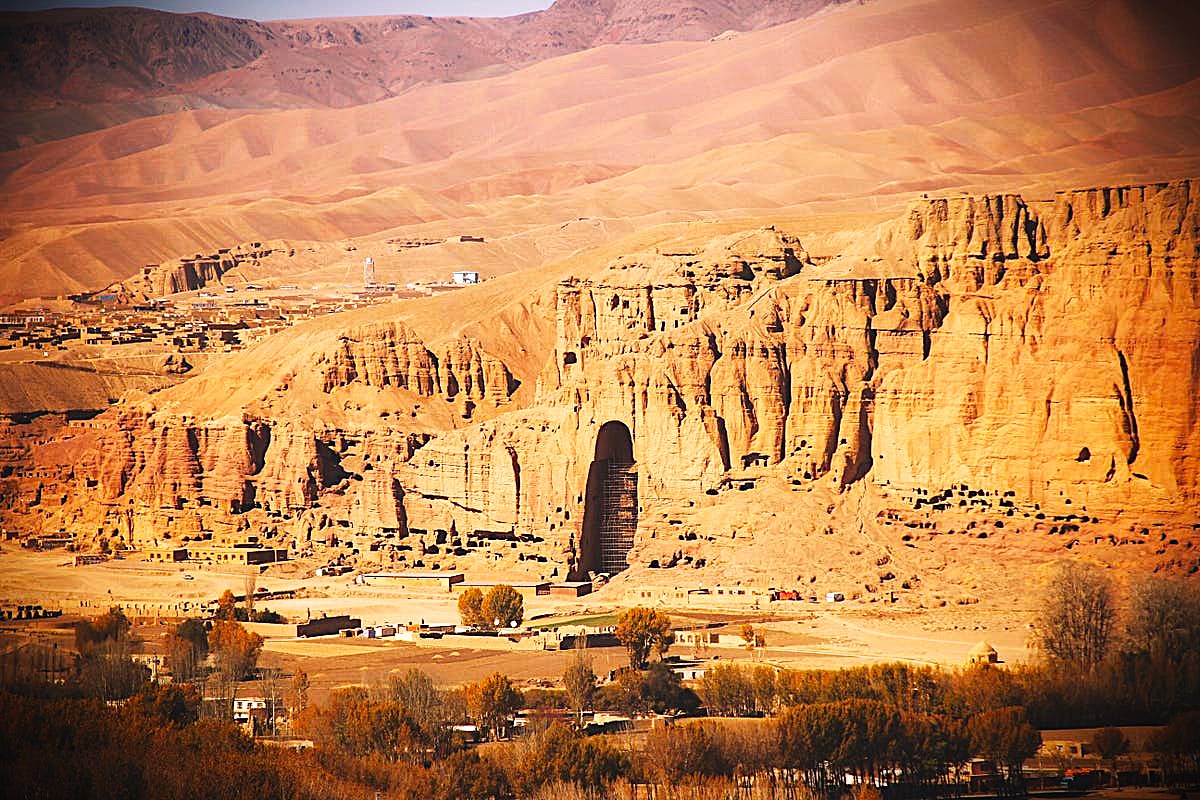
Almost everything revolves around one main road running east/west. The buddhas are on the cliff face to the north.
Get in
By car
From Kabul there are two very rough dirt roads to Bamiyan, the southern route through Wardak Province and across Hajigak Pass being shorter, more dangerous and more frequently used by public transport.
It's advisable to try to blend in on this route for the first hour or so out of Kabul - using a scarf as the Afghans do to cover your head, nose and mouth keeps the dust out and helps to lower your profile.
Toyota 4WD shared minivans seating 5-10 passengers leave Kabul starting at 04:00 daily and cost 400 Afghanis (you may have to and should bargain hard for this price), and take around 9 hours.
The northern route starts from the road heading north from Kabul, near Charikar. For an hour and a half on good tarmac road. From Charikar it goes through Parwan Province, passing Ghorband towards Shibar Pass (some 2 900 m) on a gravel road refurbished in 2007.
Total travelling time some 8 hours. Several check-posts require a local guide.
See
• The ruined Buddhas
• The area around the Buddhas
• Caves
• Shahr-e Gholghola.
• Band-e Amir
• Shahr-e Zohak
Best Places to visit in Bamyan:
1. The ruined Buddhas
The ruined Buddhas are the main reason that most people visit Bamiyan. Although some feel that to visit at all is to reward cultural vandalism and desecration... Created in the 6th century, they long were the largest in the world and a pilgrimage site for Buddhists.
Over the centuries they were damaged by various invaders, and in 2001 the Taliban declared them 'un-Islamic', rolled in tanks and destroyed them completely. All that remains are the 'footprints'. But there are many interesting caves and inside, many of the caves have remains of painted frescos.
A 300 afs ticket will get you in, and a guide (US$15/day) is well worth it.
2. The area around the Buddhas
The area around the Buddhas and to the west is interesting to walk around (stay on well-used paths).
Many of the buildings were destroyed in war and there are occasional leftover weapons and destroyed jeeps, one of which is now used as a bridge over a stream.
3. Caves
The caves of Bamiyan, Afghanistan, are a historical and cultural site known for their connection to the Buddhas of Bamiyan and their subsequent use as dwellings by local families.
Originally carved by Buddhist monks for meditation and retreat, the caves, along with the iconic Buddha statues, represent significant cultural landscape and archaeological remains of the Bamiyan Valley.
Caves are abundant throughout the mountainside, many of them used as residences. It's best to observe from a distance, out of respect for the residents and for your safety.
4. Shahr-e Gholghola:
A ruined fortified citadel situated on a hill just east of Bamiyan, providing some of the best views of the entire valley.
Shahr-e Gholghola, also known as the "City of Screams," is an archaeological site in Bamiyan, Afghanistan, known for its historical significance and role as a royal citadel.
It is part of the UNESCO World Heritage site, the Cultural Landscape and Archaeological Remains of the Bamiyan Valley.
The site is renowned for its role as a strategic location and its tragic history under the Mongol invasion led by Genghis Khan.
5. Band-e Amir
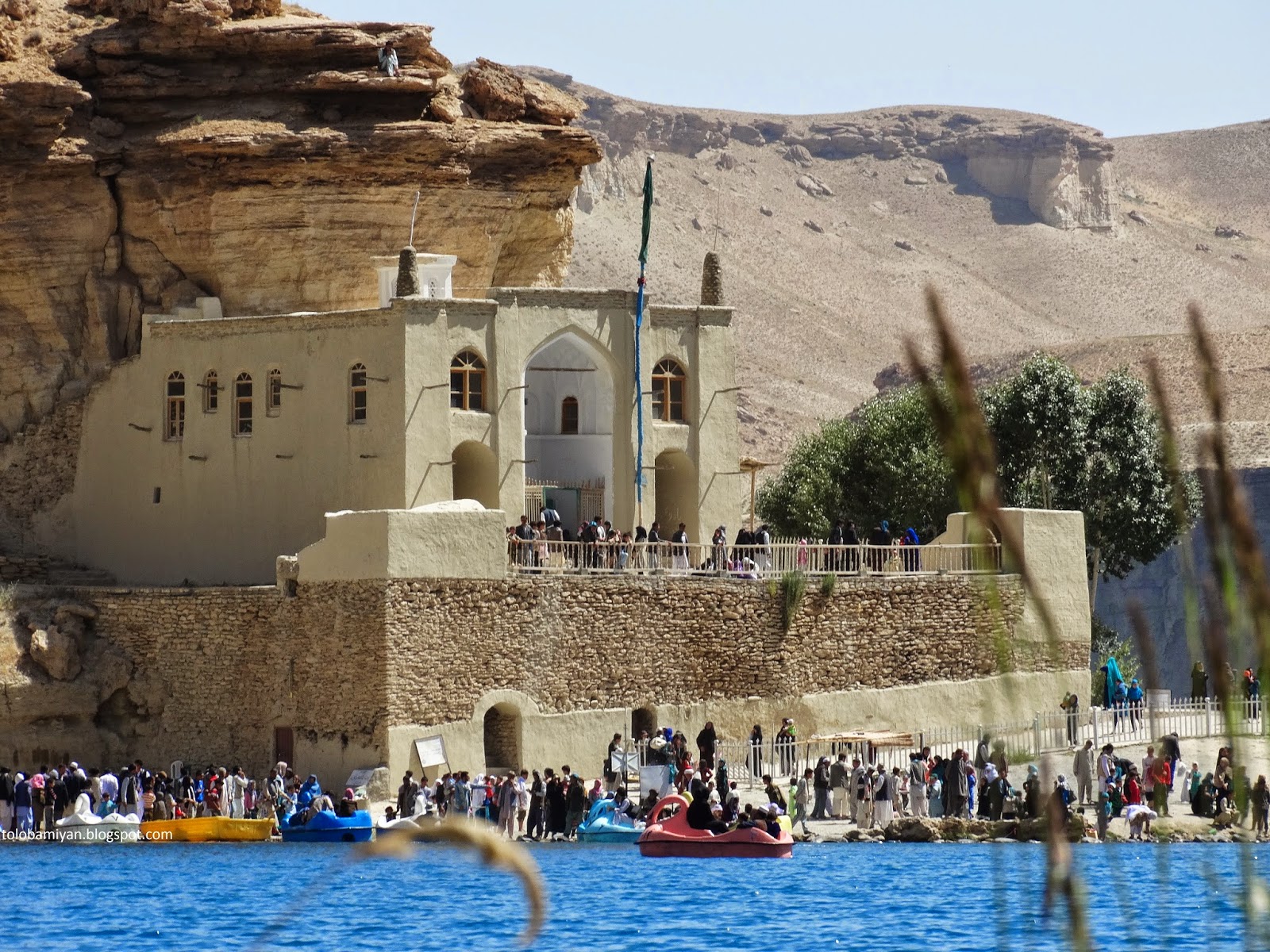
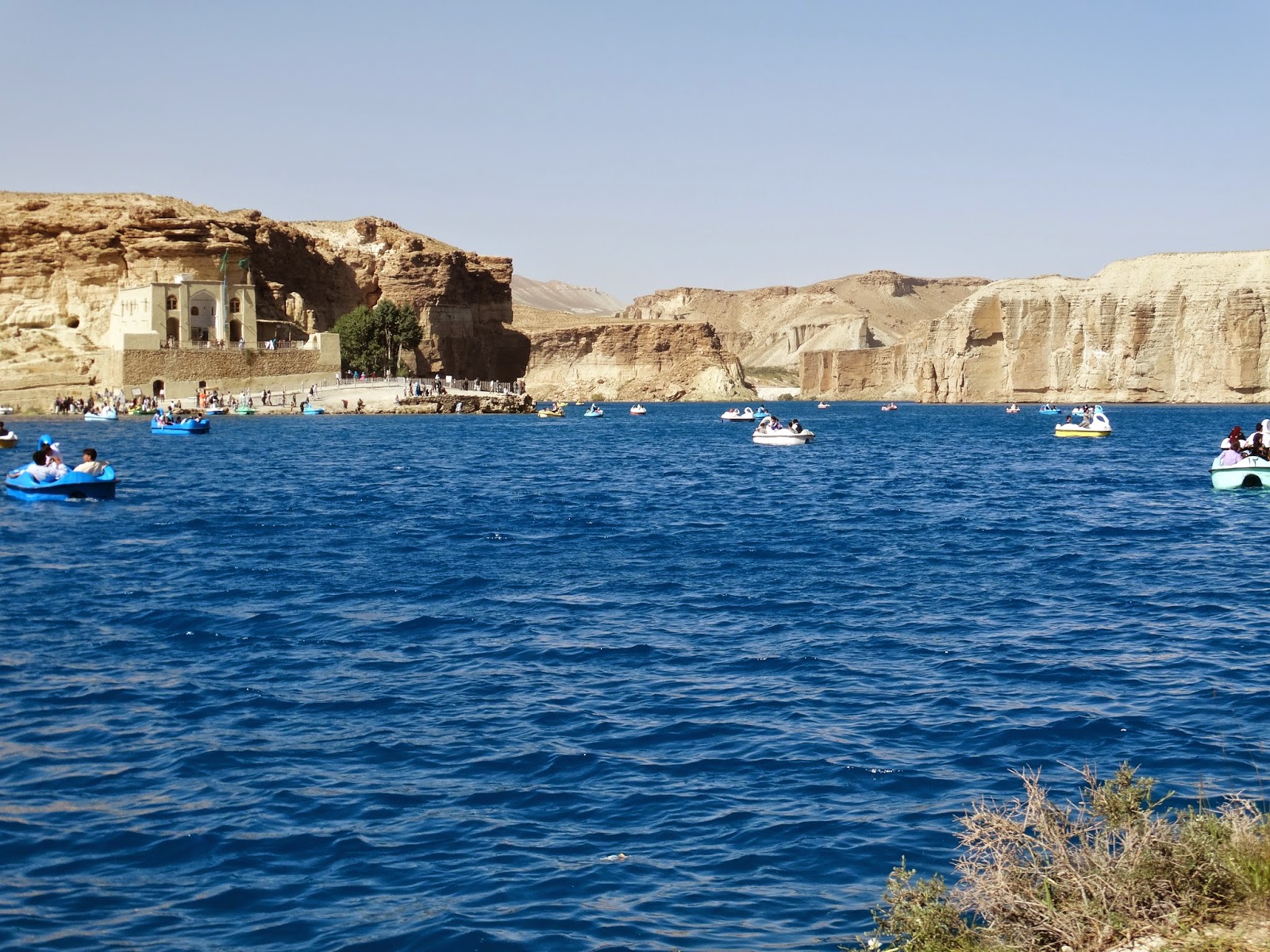
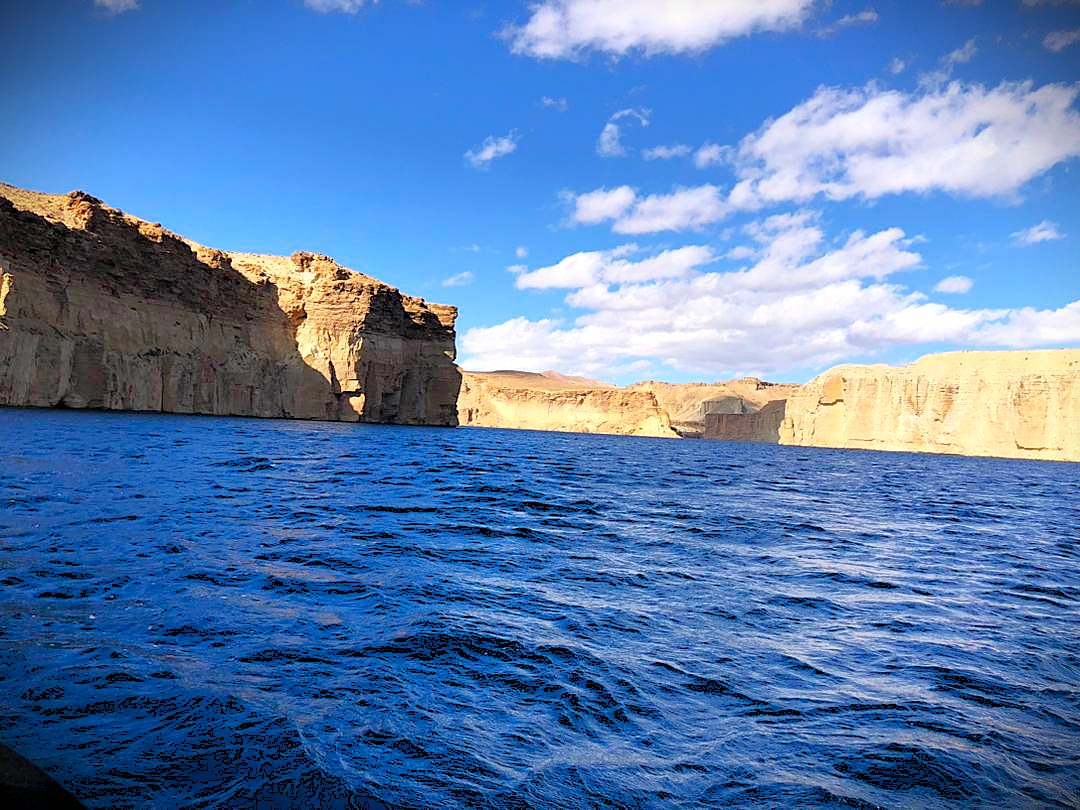
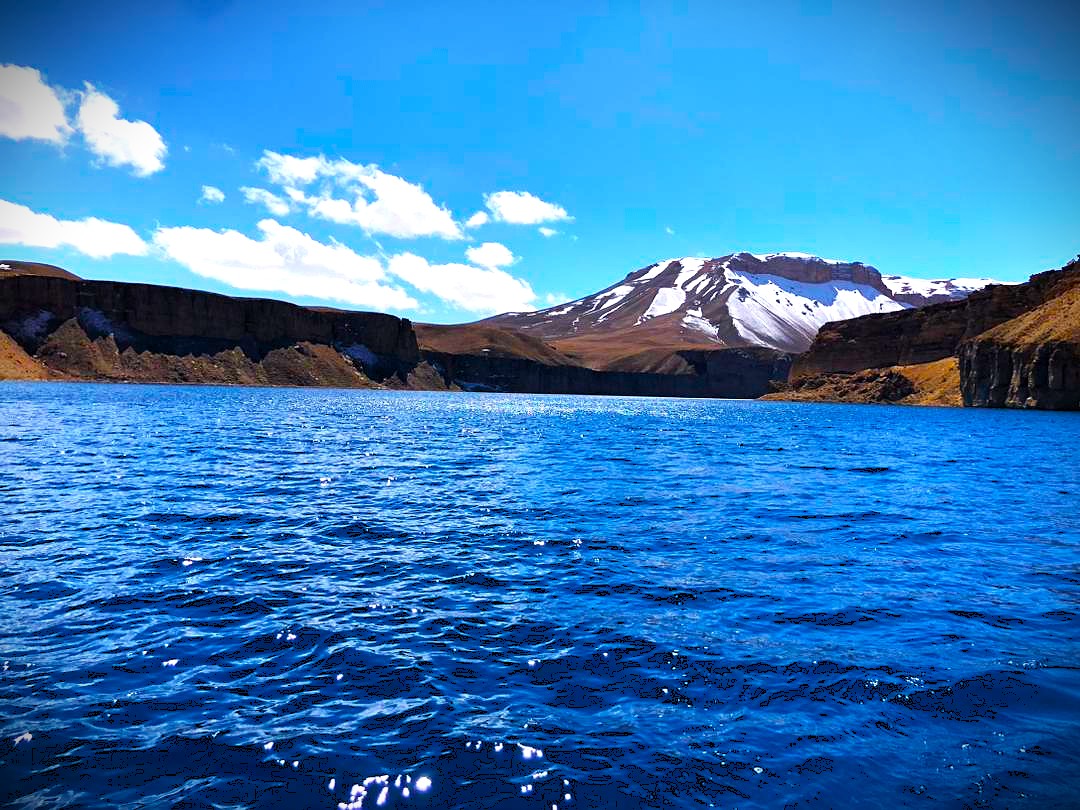
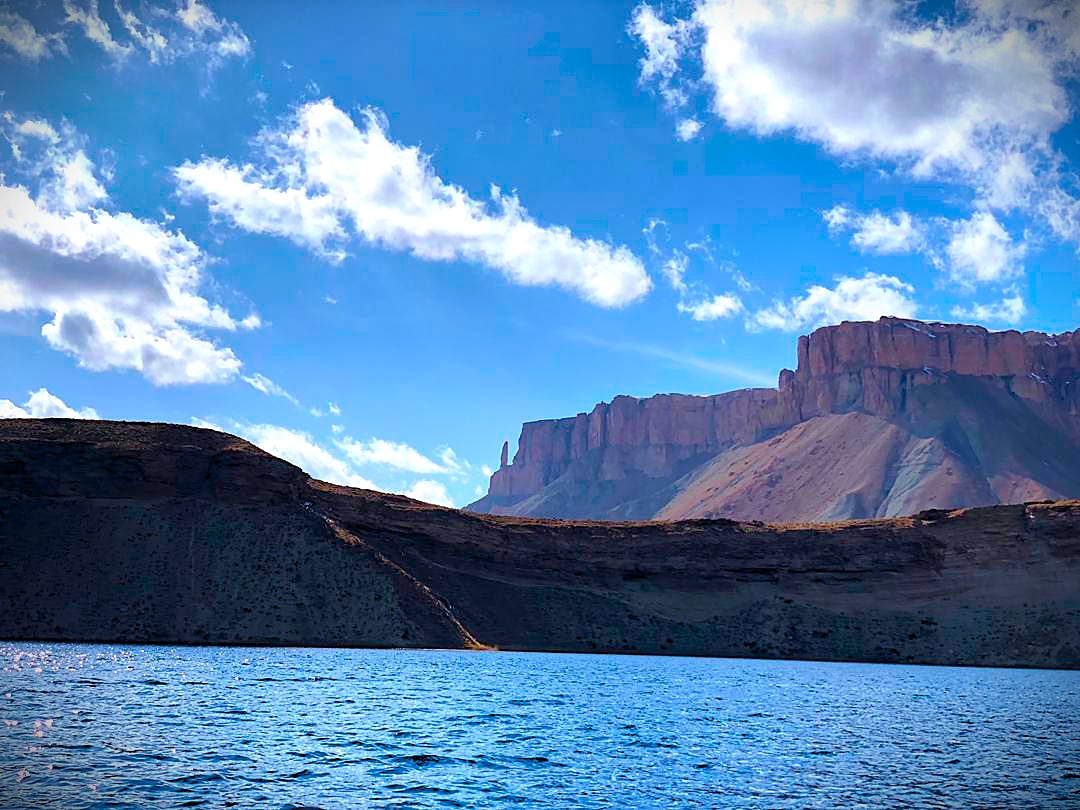
Band-E-Amir is a naturally created group of lakes with special geological formations and structure, as well as natural and unique beauty. Depth is not known; the color is pure blue. It has historical and natural background which has not been disturbed until now.
one of the most stunningly beautiful natural sights in the whole country, these turquoise lakes are definitely worth the effort. Day trips are popular, but if you have the time and don't mind roughing it, an overnight stay affords the best experience.
6. Shahr-e Zohak
is a fort some 20 km back towards Kabul that requires a jeep to get to. It's a ruined city at the top of cliffs. Your guide from the Buddhist site can also guide you here. Very interesting and great views from the top.
En route from Bamiyan there are also guard towers that are UNESCO world heritage sites.
Eat
Several chaikhanas (Tea shops) provide staple Afghani food such as pulao (rice with seasonal vegetable and mutton), naan and plenty of green tea. Alternatively have some kebab with fresh yoghurt from sheep's milk.
For finer dining, try contacting the Hotel Silk Road Bamiyan (☏ +93 798-405486, see below) and reserve a table for dinner. Whatever type of cuisine they may serve that day, it's bound to be good.
Sleep
Budget
The only really cheap option for travelers is to stay in one of several chaikhanas, where your meal (~60 Afs) includes a space on the floor for the night. Most don't have toilets or showers, so take advantage of the hammam near the Zuhak Hotel. (this "hammam" is only for men.)
Mama Najafs Restaurant is probably the most popular of the chaikhanas, as this is where the minivans arrive to and depart from.
Noorband Qala (Behind the Bazaar and beside the football stadium in central Bamyan.), ☏ +93 799 669 024. Check-out: 11:00. Silk Road Hotel level, but much cheaper.
Includes free breakfast, wireless internet, electricity at night and even during the day (until 16:00), and probably the best restaurant in Bamiyan.
Prices for the food were very reasonable (200-350 Afs). But the location isn't the most scenic as it's behind the bazaar and next to a big open soccer field. You can't get a view of the Buddha statues. US$60-80.
1 The Roof of Bamiyan Hotel, ☏ +93 7992-35298, +93 7923-5293. Sits above the town to the south-west and offers fantastic views over the Bamiyan valley. Good if you have your own transport, otherwise it's a long walk up the hill. The manager, an Afghan veteran of the hippie trail, can organize reliable vehicle hire and the like.
Popular with NGO workers and journalists. It definitely has the best view of all the hotels in Bamiyan, but the rooms are dirty and they do not maintain the rooms very well. They advertise hot water, but it's available only about half the time and you need to take quick showers because it runs out fast.
Also, it is difficult to get to town since it's on top of a hill. If you want to eat at the hotel, the prices are set and are expensive. 500 Afs for lunch, 500 Afs for dinner. 500 Afs for local food is extremely expensive. Even with all these faults, if you want great views, there isn't a better place than the Roof of Bamiyan
Yurts on the roof are US$40/Af 2000, rooms are US$40-60/2000-3000 Afs.
2 Zuhak Hotel (towards the eastern end of the main street). It's a popular place and has the cheapest rooms. Shared bathrooms have hot bucket of water in the evenings. Double rooms are US$20/1000 Afs, triples are $30/1500 Afs. This Zohak hotel is filthy but only cost 500 Afs for a single. No hot water.
Meals are US$2 each and in May 20110 the restaurant was open.
The Hotel Silk Road, ☏ +93 798-405486, mail@silkroadbamiyan.com. The most upscale accommodation in the region, rooms are spotless and comfortable, and the meals are excellent. Dinner costs US$12 per head and is worth every penny. Wireless internet is available for $5/day in your room, in the mornings and evenings when the power is on.
US$100 for a double, includes breakfast.