Samangan
Information Samangan
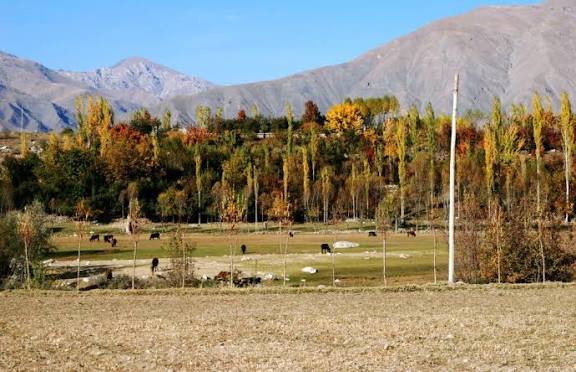
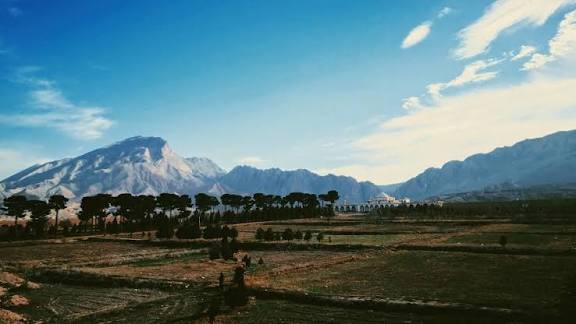
Samangan is one of the 34 provinces of Afghanistan, located north of the Hindu Kush mountains in the central part of the country.
The province covers 11,218 square kilometres (4,331 sq mi) and is surrounded by Sar-e Pol Province in the west, Balkh in the north, Baghlan in the east, and Bamyan in the south.
Samangan province is divided into 7 districts and contains 674 villages. It has a population of about 325,000 which is multi-ethnic and mostly a rural society. The city of Aybak serves as the provincial capital.
Get in
Fly to Mazar-e-Sharif: Several flights operate daily between Kabul and Mazar-e-Sharif.
Travel by Road to Samangan: The highway connecting Mazar-e-Sharif to Kabul via Samangan is considered relatively safe by Afghan standards.
Bus Option: A bus is available, but avoid the overnight bus for safety reasons.
See
Takht-e-Rustam
Chambers of monks
Jahan nama Kholam Palace
1. Takht -e- Rustam:
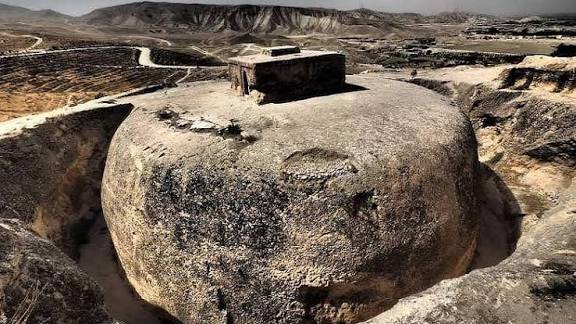
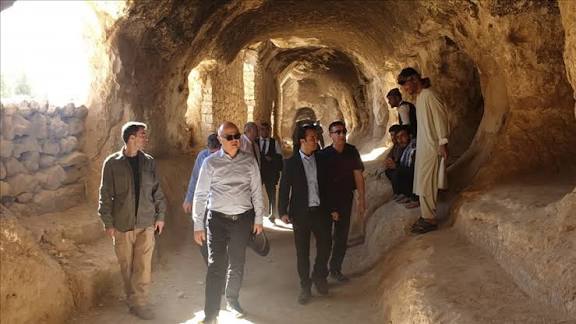
Takht-e Rostam is a unique Buddhist stupa-monastery complex located near the town of Aybak (also known as Samangan) in northern Afghanistan. Unlike most stupas, it's not built above ground but rather carved directly into the bedrock.
The complex is believed to date back to the 3rd-4th century AD, during the Kushano-Sasanian period.
Takht-e- Rustam (Haibak), literal meaning the throne of Rustam, named after Rustam, a king in Persian mythology, is a hilltop settlement. It is dated to the 4th and 5th centuries of the Kushano-Sassanian period, which is corroborated by archaeological, architectural and numismatic evidence.
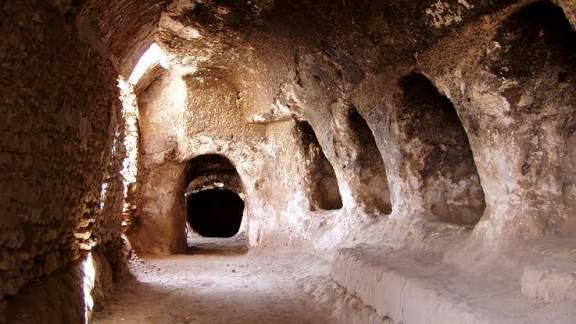
It is located 3 km to the southwest of Samangan town. It is the location of a stupa-monastery complex which is fully carved into the mountain rock. The monastery of major Buddhist tradition of Theravada Buddhism, has five chambers, two are sanctuaries and one is a domed ceiling with an intricate lotus leaf beautification.
In the adjacent hill is the stupa, which has a harmika, with several caves at its base. Above one of the caves, there is square building in which there are two conference halls; one is 22 metres square and the other is circular. In one of these caves, Archaeological excavations have revealed a cache of Ghaznavid coins.
The Buddhist temples near the Takht are 10 numbers known locally as Kie Tehe.
Here's a more detailed look:
Key Features:
Subterranean Stupa:
The stupa itself is carved into the earth, surrounded by an 8-meter deep trench.
Monastery Caves:
The trench's walls contain a Buddhist monastery with five caves and monastic cells used for meditation.
Unique Design:
The underground design is unusual and has led to speculation about its purpose, possibly for camouflage or protection from the elements.
Harmika:
At the top of the stupa is a stone-carved Harmika building, which would have housed relics of the Buddha.
Buddhist Monastery:
The site was a significant Buddhist monastery, attracting visitors and pilgrims.
Silk Road Connection:
Located on the ancient Silk Road, it highlights the region's historical importance as a crossroads of cultures and religions.
Diverse Religious Past:
The area was once home to Buddhists, Zoroastrians, and Hindus, showcasing Afghanistan's rich religious history.
Visiting:
Location: About 2 km south of Aybak.
Transportation: Taxis or private cars are the most practical way to reach it from Aybak.
Entrance Fee: A small entrance fee is usually charged.
2. Chambers of Monks
Historicity of the Samangan town dates to the time of the Kushan Empire during the 4th and 5th centuries when it was a famous Buddhist centre.
Witness to this period is seen now in the form of ruins at a place called the Takht-e Rostam, which is located 3 km from the town on a hilltop. Arabs and Mongols came to this place when it was already famous as a Buddhist religious centre. Aibak was the name given to this place when, during the medieval period, caravans used to stop here.
Afghanistan has various archaeological sites where caves were hewn out of rocks and inhabited by Buddhists. "One of the most spectacular sites is that of Takth i Raustam, near Samangan (Haybak), north of Hindu Kush passes. It includes a complex of stupa with monastery, hewn out of the rock.
3. Jahan nama Kholam Palace:
Jahan Nama Palace, also known as Bagh-e Jahan Nama, is a historical palace located in the Khulm district of Samangan province, Afghanistan. It was built in the late 19th century by Amir Abdur Rahman Khan in the Indian colonial style. The palace is currently at risk of collapse and is in need of preservation.
Here's some more detail:
Location: Khulm district, Samangan province, Afghanistan.
Historical Significance: Built by Amir Abdur Rahman Khan, known as the "Iron Emir".
Architectural Style: Indian colonial style.
Current Condition: At risk of collapse, according to locals.
Potential Future: There are plans to turn the palace into an ethnographic museum focusing on the history and cultures of the northern plains.
Past Events: The palace was damaged by a 1976 earthquake and used as a Soviet army base after the 1979 invasion.
Note:
Lack of Tourist Facilities: Samangan lakes of tourist facilities, there may be a lack of tourist facilities such as hotels, restaurants, and tourist attractions. Travelers may need to be prepared for basic accommodations and limited amenities.